800-522-3725
 info@standleys.com
 Support
5 min read
AI Email Security for SMBs: How INKY Stops Advanced Phishing Attacks
By:
Rachel Redemer
on
June 22, 2026
Updated: June 22, 2026
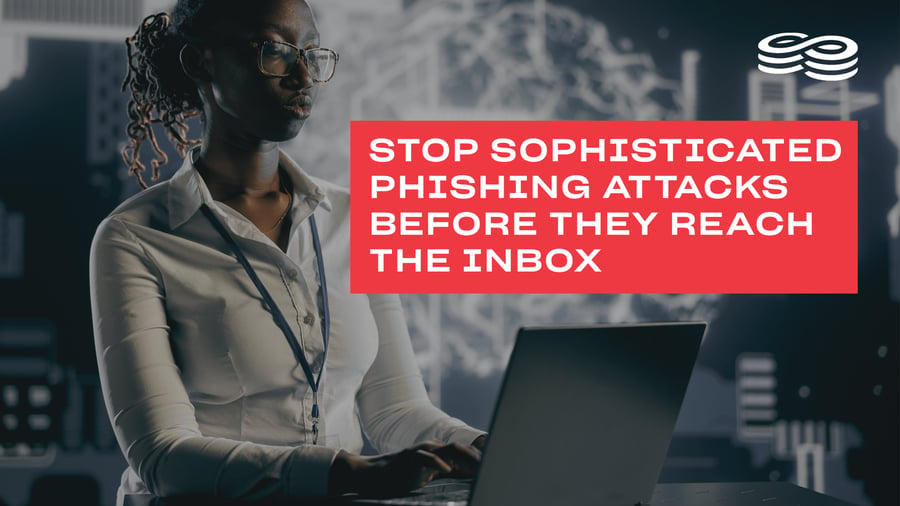
Email remains the #1 entry point for cyberattacks, and small to medium-sized businesses (SMBs) are increasingly becoming prime targets. As phishing attacks grow more sophisticated, traditional email filters often struggle to keep up.
That’s where AI email security solutions like INKY come in.
Using artificial intelligence and machine learning, modern security tools can identify threats that older systems miss — helping businesses prevent phishing attacks before employees ever see them.
If you’re evaluating phishing protection for businesses, understanding how AI-powered email security works can help you better protect your organization.
Why Phishing Is Still the Biggest Cyber Threat
Phishing attacks have evolved far beyond the obvious scam emails of the past. Today’s attackers use sophisticated techniques designed to trick even experienced employees.
Modern phishing attacks often include:
- Spoofed domains that look identical to trusted brands
- Business email compromise (BEC) impersonating executives or vendors
- AI-generated messages that mimic real communication styles
- Malware attachments disguised as legitimate files
Because these attacks are carefully crafted, traditional spam filters often fail to detect them.
For SMBs without advanced email protection, a single successful phishing email can lead to:
- Data breaches
- Financial fraud
- Ransomware infections
- Account takeovers
This is why AI email security is becoming essential for modern cybersecurity strategies.
What Is AI Email Security?
AI email security uses artificial intelligence, machine learning, and behavioral analysis to identify suspicious messages that traditional filters miss.
Instead of relying only on known threat signatures, AI analyzes multiple factors within an email, including:
- Language patterns
- Sender behavior
- Domain reputation
- Link structure
- Message context
This allows AI-powered platforms to detect previously unseen phishing attacks in real time.
Tools like INKY apply advanced computer vision and machine learning to examine emails the same way a human would — but at machine speed and scale.
The result is stronger phishing protection for businesses, even as attackers constantly evolve their tactics.
How INKY Stops Advanced Phishing Attacks
INKY is designed specifically to detect and stop sophisticated phishing threats that bypass traditional email security tools.
Here are some of the ways INKY protects organizations.
AI-Based Phishing Detection
INKY uses artificial intelligence to analyze both the content and intent of emails.
Instead of only scanning for known malware signatures, it evaluates whether a message behaves like a phishing attempt. This allows it to detect:
- Brand impersonation attacks
- Business email compromise attempts
- Credential harvesting links
- Suspicious attachments
Because the system learns over time, it becomes better at identifying evolving threats.
Computer Vision for Brand Impersonation
One of INKY’s most powerful features is computer vision technology.
Attackers often embed company logos or brand graphics in phishing emails to make them appear legitimate. INKY visually analyzes emails to detect when attackers attempt to impersonate trusted brands.
If a suspicious email is detected, the platform can automatically:
- Flag the message with warning banners
- Quarantine the email
- Block the message entirely
This dramatically reduces the chance that employees will fall for phishing scams.
Real-Time User Warnings
Even when a message reaches an inbox, INKY helps employees recognize potential threats.
The system places clear visual warnings inside suspicious emails, explaining why the message may be dangerous.
This approach improves employee awareness while still allowing legitimate emails to be delivered.
Security awareness training remains an important part of protecting users from phishing attacks.
Why SMBs Need Advanced Phishing Protection
Many SMBs assume cybercriminals only target large enterprises. In reality, smaller organizations are often easier targets due to limited security resources.
Implementing AI email security provides several critical advantages.
Protection Against Zero-Day Phishing
AI-based systems can identify new phishing attacks that have never been seen before, preventing threats that bypass traditional filters.
Reduced Risk of Human Error
Employees are often the last line of defense. AI-powered email protection adds an additional safety layer that helps prevent costly mistakes.
Automated Threat Detection
Security teams no longer have to manually analyze suspicious emails. AI systems automatically detect and stop many threats before they reach users.
Phishing Attacks Increase During High-Risk Periods
Cybercriminals often launch phishing campaigns during busy seasons when employees are more likely to overlook suspicious emails.
For example, holiday shopping periods frequently see spikes in phishing attacks disguised as shipping notifications or retail promotions.
Understanding these patterns can help businesses prepare and strengthen their defenses.
AI Email Security Is Part of a Layered Defense
While AI-powered email protection is incredibly effective, no single security solution can stop every threat.
The most effective cybersecurity strategies rely on layered security, where multiple technologies work together to protect your organization.
Combining tools such as:
- AI email security
- Endpoint detection and response (EDR)
- Identity protection
- Security awareness training
creates a stronger defense against modern cyber threats.
Protecting Your Business from Modern Phishing Attacks
Phishing attacks continue to evolve, using increasingly advanced techniques to bypass traditional security tools.
By adopting AI email security solutions like INKY, businesses gain powerful protection against sophisticated phishing campaigns.
For SMBs looking to strengthen their cybersecurity posture, implementing modern phishing protection for businesses is a critical step toward preventing costly data breaches and email-based attacks.