800-522-3725
 info@standleys.com
 Support
7 min read
From Help Desk to Self-Healing Devices: How AI Is Changing Print Support
By:
Kali Mogg
on
March 2, 2026
Updated: March 2, 2026
For years, print support has worked the same way: something breaks, someone notices, a ticket gets submitted and a technician gets dispatched. It’s a reactive cycle that costs time, productivity, and patience.
But that model is changing.
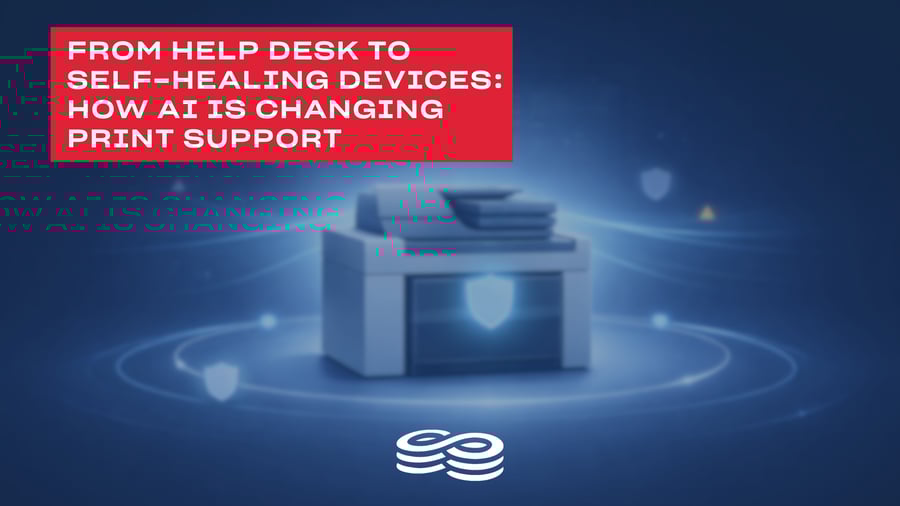
Today, artificial intelligence (AI) is quietly transforming print environments from “call us when it breaks” to something much smarter: systems that can predict, prevent, and sometimes even fix issues on their own. At Standley Systems, we see this shift as more than a technology upgrade, it’s a better experience for our customers.
Let’s take a closer look at what’s changing and what it means for your organization.
The Shift Toward Automated Print Support
Modern workplaces depend on uptime. When printers or multifunction devices go down, the impact ripples through departments, slowing workflows, delaying documents, and frustrating users.
AI-driven print support flips the script by focusing on prevention instead of reaction. These systems continuously monitor devices, learn normal behavior, and identify warning signs before users ever see a problem. The result? Fewer disruptions, fewer emergency service calls, and a smoother day-to-day experience for your team.
This is the foundation of what many now call self-healing devices, technology that doesn’t wait to fail before taking action.
How Our Manufacturer Partners Are Using AI
Our manufacturing partners are leading the way in applying AI to print technology, and we bring those innovations directly to our customers.
HP uses AI-driven analytics to monitor device performance, predict failures, and automatically trigger service events. In many cases, supplies are shipped, or service is scheduled before the customer realizes anything is wrong.
Ricoh leverages AI to analyze usage patterns, optimize device settings, and detect anomalies that could indicate future issues. Their smart diagnostics reduce troubleshooting time and help resolve problems faster – often remotely.
Kyocera focuses on predictive maintenance and long-life components, using intelligent monitoring to identify wear, prevent breakdowns, and extend device life while minimizing downtime.
Together, these technologies create print environments that are more reliable, more efficient, and far less disruptive.
Do We Use AI Today?
Yes – intentionally and thoughtfully.
At Standley, we don’t adopt technology just because it’s trendy. We focus on tools that deliver real, measurable value to our customers. AI plays a growing role in how we manage, support, and optimize print environments, especially when paired with the right service strategy.
Rather than replacing people, AI enhances our service teams by giving them better insight, faster diagnostics, and clearer priorities. That means when human support is needed, it’s more informed and more effective.
Does MSAA Use AI or Predictive Service Tools?
Our MSAA (Meter Supply Automation Agent) plays a critical role in proactive print support and aligns closely with AI-driven principles.
MSAA continuously monitors device meters, supply levels, and performance data across your fleet. When the system detects trends such as declining toner levels, abnormal usage patterns, or indicators that a device may need attention, it can automatically trigger supply replenishment, generate alerts, or initiate service workflows.
While MSAA isn’t “AI” in the buzzword sense, it delivers the outcomes organizations actually care about: automation, predictability, and fewer surprises.
The result is a print environment that runs quietly in the background, without users having to think about meters, toner, or service calls.
The Impact on Service Calls and Uptime
The difference is noticeable.
Organizations using MSAA and predictive monitoring tools experience:
- Fewer emergency service calls
- Reduced help desk tickets related to printing
- Faster issue resolution
- Increased device uptime
Instead of reacting to frustrated end users, IT teams gain visibility and control. Printers become reliable infrastructure, not daily distractions.
The Standley Difference
Technology matters, but how it’s implemented matters even more.
What sets Standley Systems apart is our ability to connect intelligent print technology with real-world business goals. We don’t just install devices and walk away. We design document and print strategies around:
- Your workflows
- Your security requirements
- Your compliance needs
- Your growth plans
By combining manufacturer innovation, MSAA-driven automation, and decades of experience, we deliver document management and managed print solutions that simply work.
Ready to simply print support?
Let’s talk about how Standley Systems can help you move from reactive print issues to a smarter, more proactive document management strategy.